Jet Pulse Dust Filters and Silo Filters
DOSERAY designs and manufactures jet pulse dust filters, silo top filters and process filters for pneumatic and mechanical conveying systems. Our filters separate powders and granules from the conveying air under pressure or vacuum, protect your plant and the environment from dust, and return the product to the process. Every filter is sized for your material, particle size and air volume.
Many powders stored in silos, such as flour, sugar, starch,
plastics, wood dust and some chemicals, can form explosive dust
clouds. DOSERAY ATEX silo filters are designed for these hazardous
areas and comply with the ATEX Directive 2014/34/EU.
Our
ATEX jet pulse silo filters include:
Antistatic filter
media (bags or cartridges) to prevent electrostatic charge
build-up
Full grounding of the housing, filter elements and
cage
Ex-rated solenoid valves and control panel for the jet
pulse cleaning system
Explosion venting panels (or flameless
venting for indoor installation) to release pressure safely
Stainless steel or carbon steel construction, suitable for dust
zones 20, 21 and 22
Each filter is selected according to
your product's explosion characteristics (Kst and Pmax values),
the air volume and the installation zone. Combined with our ATEX
rotary valves, we deliver a complete, safe solution for silo
venting and dust collection.
Contact us with your product
and silo details for an ATEX filter proposal.

Why Every Powder Process Needs a Dust Filter
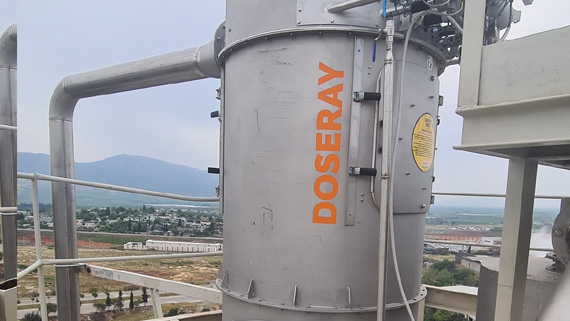
When powders and granules are transferred pneumatically or mechanically, dust is released as soon as the material enters the process. To keep the plant clean and to separate the product from the air, a dust separator or filter is required at silos, bins, mixers and receivers.
Cyclones and filters both separate dust from air, but they are not interchangeable: a cyclone alone cannot replace a filter in every application. During separation the filter elements load up with dust and must be cleaned at regular intervals, otherwise the pressure drop rises and the filter stops working. Cleaning is done by vibration or by compressed-air jets. In conditioned processes the cleaning air must be conditioned in the same way as the process air.
For this reason we design filters with specific characteristics according to the particle size of your powder, the working capacity and the process data you provide. Below the filter, a rotary valve discharges the collected dust and keeps the system sealed.
Filter Technology and Features

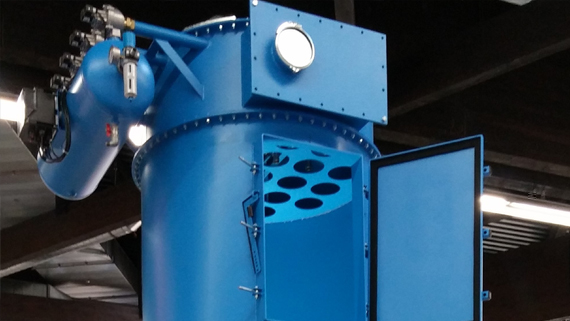
- Stainless steel cylindrical body with bottom flange for silo and bin mounting
- Filter elements: round bags, elliptical bags or pleated cartridges
- Compressed-air jet pulse cleaning system integrated in the top cover
- Electronic control panel for cleaning cycle and differential pressure
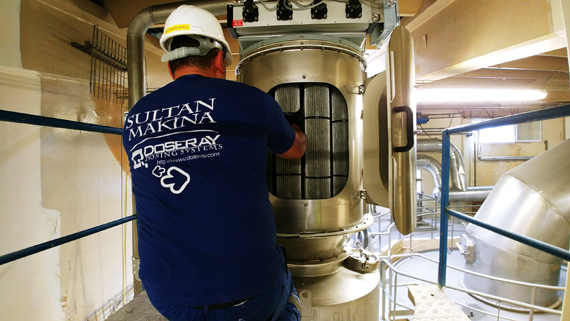
- Tool-free filter element replacement at a comfortable maintenance height
- Weather protection cover with lockable quick release for outdoor installation
- Hygienic design for food and pharmaceutical applications
- Low operating and maintenance costs

Jet Pulse Filters
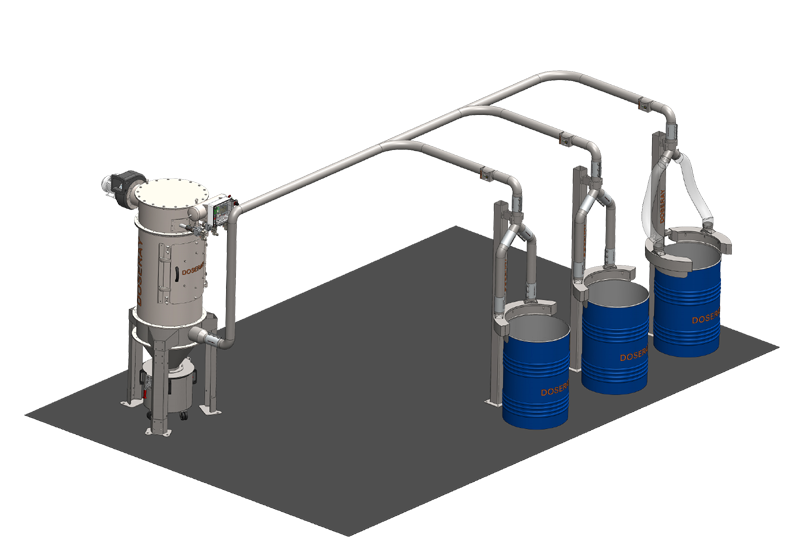
We supply complete dust separation packages, from jet pulse filters to cyclone systems, selected according to your process, the particle size of the conveyed material and whether the system works under vacuum or pressure.
In filter manufacturing we work with European solution partners and with domestic producers of filter cloth and special filter elements. For demanding applications we use 100% PTFE (Teflon™) media that withstand jet pulse cleaning, combined with a filter construction developed by our own engineering team. Where a project requires it, we also integrate components from leading European filter manufacturers.
Filter Design
Our filters are designed for maximum operating temperatures of 150–250 °C and separate particles down to 1–5 microns. They offer a large dust-holding capacity in a small diameter. Depending on the process, the filter media can receive one of the following treatments for the most efficient pneumatic conveying:
- Surface finishing (singeing)
- Calendering
- PTFE impregnation
- PTFE membrane coating
- Special resin coating
A good dust collection system is one of the most important parts of any pneumatic conveying plant, which is why we treat the filter as part of the system design, not as an accessory.
Frequently Asked Questions
How does a jet pulse filter work?
Dusty air passes through filter bags or cartridges, and the dust collects on the outside of the elements while clean air leaves the filter. At set intervals a short pulse of compressed air from a solenoid valve is blown into each element, knocking the dust cake off so it falls into the hopper or back into the silo. This keeps the pressure drop low without stopping the process.
Should I choose a cyclone or a filter?
A cyclone separates coarse particles economically and has no filter elements to replace, but it does not capture fine dust. A jet pulse filter captures fine particles down to a few microns. In many systems a cyclone is used first to remove most of the product and a filter is used after it for the fine dust.
Bags or cartridges: which filter element is better?
Filter bags tolerate higher dust loads, abrasive products and higher temperatures. Pleated cartridges give much more filter area in a compact housing and are easy to change. The right choice depends on the dust, temperature, moisture and available space.
What temperature can your filters handle?
Depending on the filter medium, our filters are designed for maximum operating temperatures of 150 to 250 °C.
What information do you need to size a dust filter?
We need the air volume (m³/h), the dust type and particle size, the dust load, the gas temperature and moisture, whether the system works under pressure or vacuum, and any ATEX requirement. With these values we calculate the filter area and select the filter medium.