
Rotary Valves and Rotary Airlock Feeders
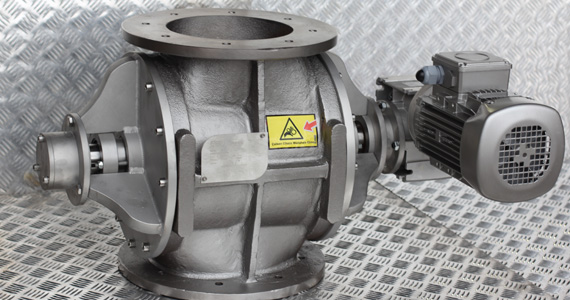
DOSERAY designs and manufactures rotary valves (also called rotary airlocks, rotary feeders or star feeders) for powders, granules, pellets and crystals. Our valves meter material at a controlled rate from silos, hoppers, cyclones and dust collectors, and feed it into dilute-phase and dense-phase pneumatic conveying lines while keeping the pressure difference sealed. They work under gravity, pressure and vacuum conditions.
What Is a Rotary Valve?

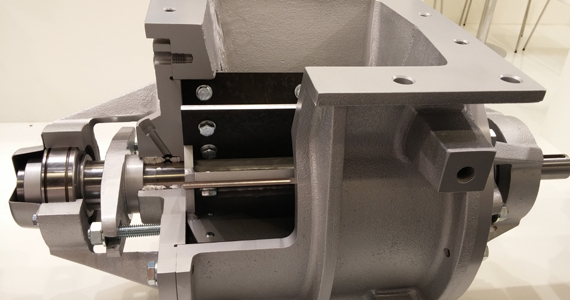
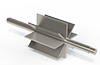
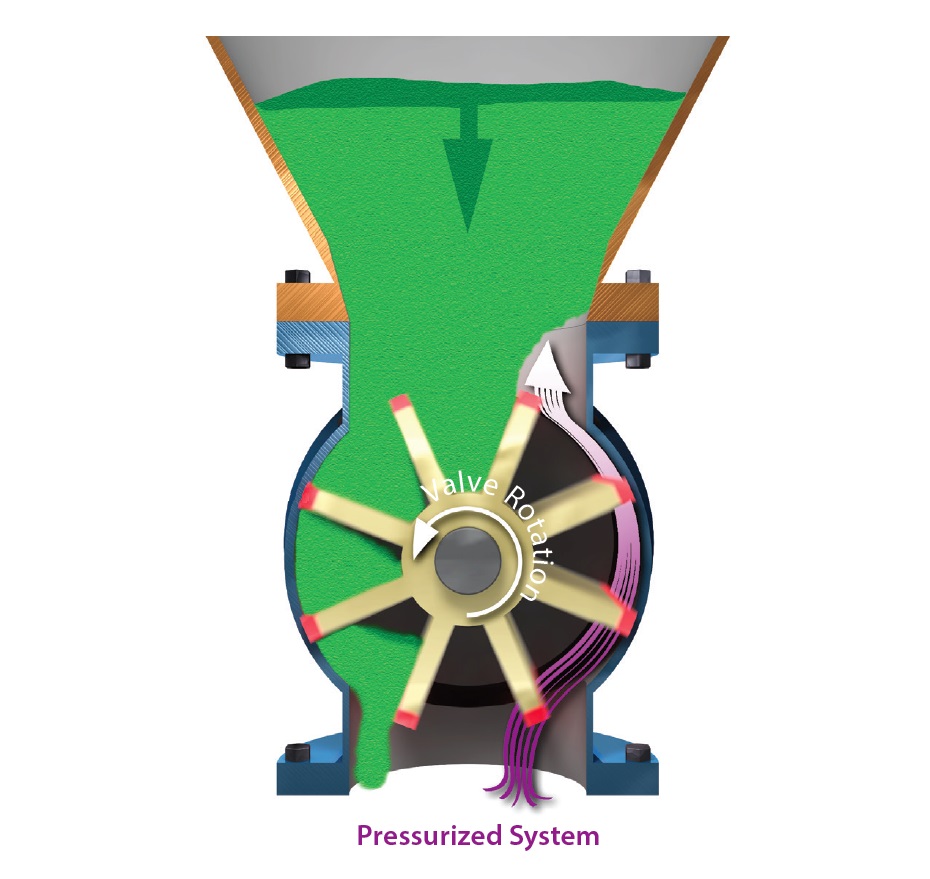
A rotary valve is a compact mechanical device for continuously discharging bulk powders or granules under gravity flow. It is one of the simplest machines in a plant: apart from the drive it has only one moving part, a multi-vane rotor turning with a close clearance inside the housing. Material enters through the inlet at the top, fills the rotor pockets and leaves through the outlet at the bottom.
How a Rotary Airlock Works
In a pneumatic conveying line, the rotary airlock feeds material into the conveying pipe and separates the conveyed material from the air. Because the rotor vanes run with tight tolerances against the housing, the valve also acts as a seal between zones at different pressures, so air or gas does not escape while material keeps flowing. The same valve is widely used as a volumetric feeder, metering material at a precise rate from bins, hoppers or silos onto conveyors and process equipment. Depending on the product, it can also work as a lump breaker or together with a separate breaker.
Blade shape, tolerances and rotor speed are selected for each application, according to the process and the material being handled. A standard valve works well for products such as flour and cement, but a small change in particle size or a different material can make a standard design fail. That is why we size every valve for the actual product.
Materials, Seals and Rotor Options
Construction materials
- ST37 carbon steel
- AISI 304 and AISI 316 stainless steel
- Hardox and Ni-Hard for abrasive products
Shaft seals
Gland packing, mechanical seals, oil seals or felt seals, selected according to the product and process temperature.
Rotor types
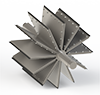
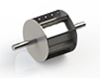
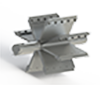
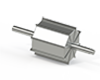
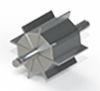
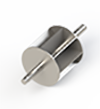
Bladed, rounded-pocket, adjustable-vane, scraper (stripper) and polyamide-tipped rotors.
ATEX-certified rotary airlock versions are also available for processes with combustible dust.
Connection Types
Before choosing a valve, define how it will connect to the rest of the system and how it will be fed and discharged: hopper feeders, blowers, simple piping or other equipment. These details determine the right inlet and outlet flanges, drilling pattern and welding points, and they have a direct effect on how well the valve performs.
Applications and Industries
- Food and chemical processing
- Pharmaceutical manufacturing
- Plastics manufacturing
- Conveying and metering abrasive products
- Applications that need frequent cleaning or hygienic design
- Pneumatic conveying systems
- Discharge of silos, hoppers, cyclones and bag filters
Typical materials include cement, ore, sugar, minerals, grains, plastics, dust, fly ash, flour, gypsum, lime, coffee, cereals and pharmaceutical powders, as well as products from spray dryers.

Why Choose a DOSERAY Rotary Airlock?
Since 1992 DOSERAY has built storage, dosing and pneumatic conveying equipment, and the rotary valve is at the centre of most of these systems. We offer a complete range of rotary airlocks, from gravity discharge valves under filters, cyclones and dust collectors to precision feeders for dilute-phase and continuous dense-phase conveying.
- Designed and machined in-house to tight rotor-to-housing tolerances for a reliable air seal
- Sized for your actual product, capacity and pressure difference
- Wear-resistant and stainless designs for abrasive and corrosive materials
- ATEX, high-temperature and quick-clean versions
- Custom inlet and outlet connections for retrofits
Download CAD drawings
Blow-Through Rotary Valves
A rotary valve is never used on its own: it is one component of a bulk or specialty material handling system. In a blow-through valve, the conveying air passes directly through the rotor pockets, which empties cohesive materials more reliably and saves headroom compared with a drop-through valve and pick-up adapter. Blow-through rotary airlocks are used wherever dry, free-flowing powders, granules, crystals or pellets are conveyed.


Rotary Valve Sizes and Capacity
DOSERAY rotary valves are rugged and trouble-free. They are ideal as feeders and airlocks in vacuum and low-pressure positive conveying systems, and they keep a proper air seal even with abrasive and corrosive products. Standard sizes range from 120 mm to 450 mm, with many models and construction materials.
Capacity depends on the rotor volume, rotor speed, pocket filling rate and the bulk density of your product. Send us your material, required capacity (t/h or m³/h) and pressure difference, and we will recommend the right model.
Frequently Asked Questions
What is the difference between a rotary valve and a rotary airlock?
They are the same machine. It is called a rotary valve or rotary feeder when its main job is metering material at a controlled rate, and a rotary airlock when its main job is sealing between two zones with different pressures, for example under a cyclone or at the inlet of a pneumatic conveying line.
When should I use a blow-through rotary valve instead of a drop-through valve?
A blow-through rotary valve lets the conveying air pass directly through the rotor pockets, so it empties sticky or cohesive materials more reliably and needs less headroom. A drop-through valve discharges by gravity into a pick-up adapter and suits free-flowing powders and granules.
Which materials are DOSERAY rotary valves made of?
Housings and rotors are manufactured in ST37 carbon steel, AISI 304 and AISI 316 stainless steel, and in Hardox or Ni-Hard for abrasive products. Shaft seals can be gland packing, mechanical seals or oil seals depending on the process.
Do you supply ATEX rotary valves?
Yes. ATEX-certified rotary airlock versions are available for processes with combustible dust.
How do I choose the right rotary valve size?
The size depends on the required capacity, the bulk density and flow behaviour of the material, the rotor speed and the pressure difference across the valve. Send us these values and we will calculate the right model; CAD drawings for 120 mm to 450 mm valves can be downloaded above.